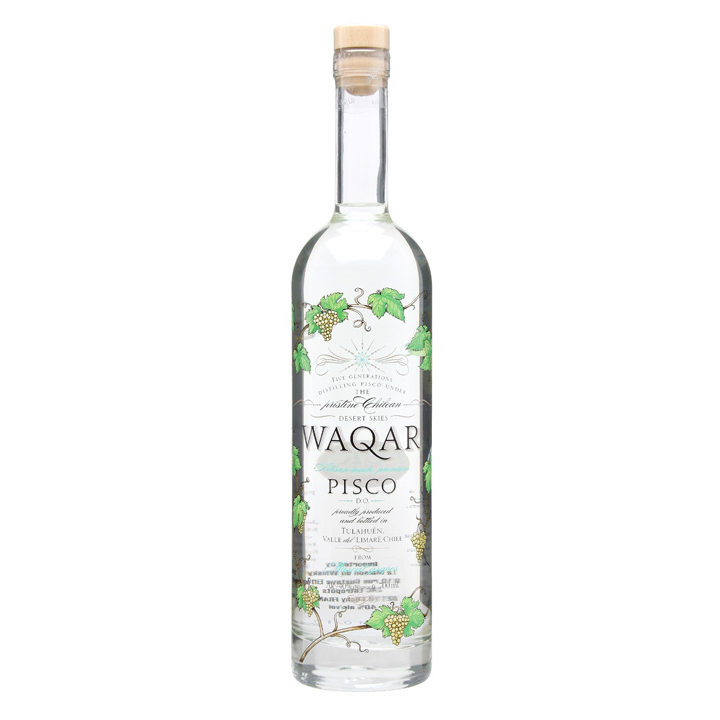
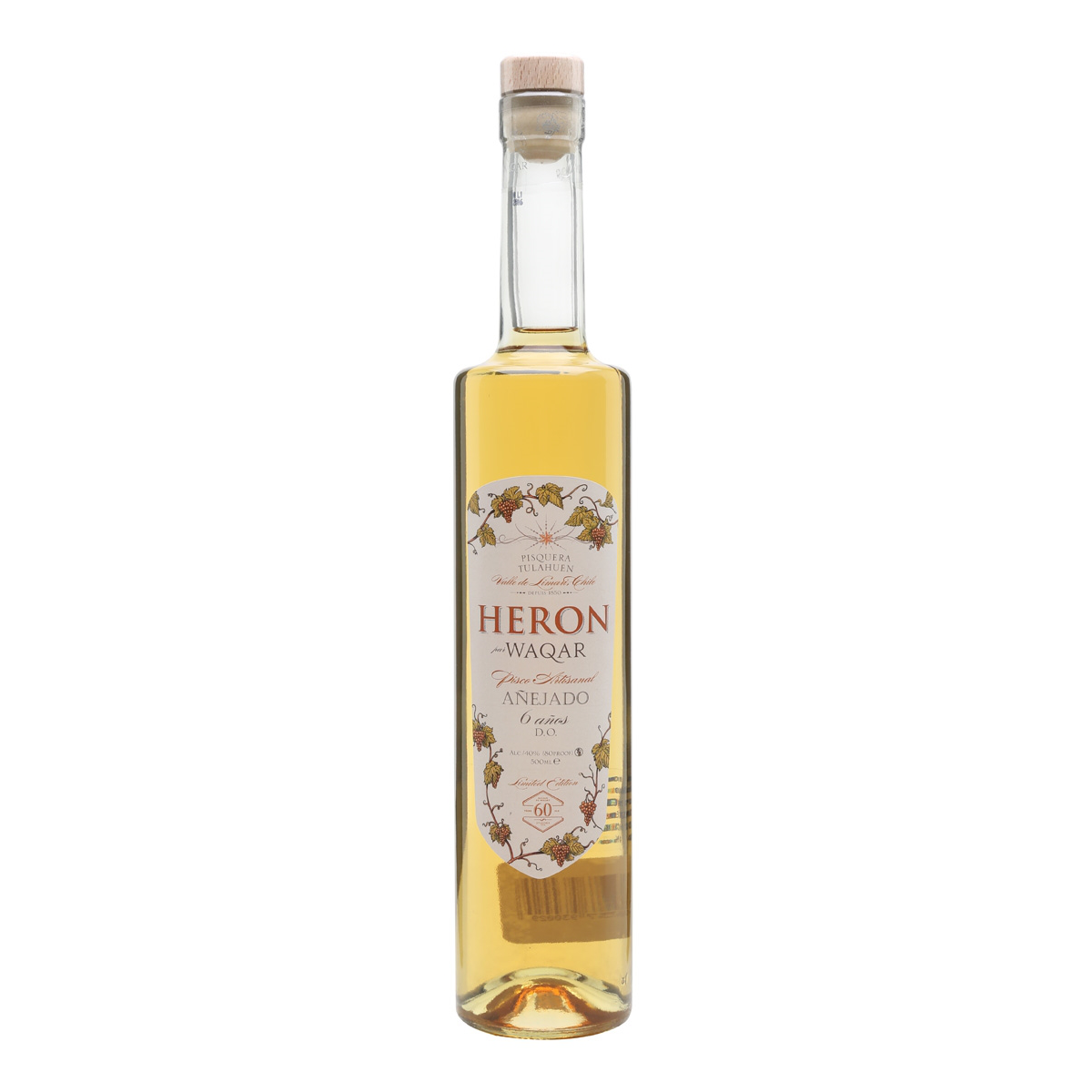
Historically we can trace Pisco back to the Spanish settlers in the 1600’s who brought their knowledge of distillation with them to their colonies. Historians believe that Pisco originated in Peru, specifically as Aguardiente de Pisco. Aguardiente is a Spanish term for a variety of distilled spirits as the name translates to ‘fiery water’. Nowadays Aguardiente can be either used for a variety of spirits or as a loose term for distilled spirit.
During Spanish colonisation grapes were distilled into a high abv liquid, usually to fortify locally produced wine. By adding a bit of higher proof liquid to the wines they could make sure that the wine wouldn’t spoil during transport. However, the resulting distilled spirit started to be drunk by the locals and gained popularity on its own.
The town of Pisco in Peru was an important port city from which a lot of goods would start their journey across the world. And one of these items would have been Aguardiente stemming from the port city of Pisco, giving rise to the term Aguardiente de Pisco, also known as Pisco in other places of the world.
Nowadays, with both Chile and Peru laying claim to the product we can make a distinction between the two. Both Peru and Chile have their own rules around how to produce Pisco and their own classifications.
Peruvian Pisco can only be made within 5 regions of the country, legislated by the Government in 1991. Peruvian Pisco has to be made with grapes which are native to Peru and are grown and harvested in the 5 regions that are allowed to produce Pisco. After fermentation, this liquid is distilled in a copper pot still. The liquid is distilled only once. No water is added after distillation, meaning that during the one and only run the liquid has to reach an abv of 38% up to 48%. This does mean that Peruvian producers will have to sometimes add parts of the tail of distillation and add unwanted alcohols to balance the abv of the final product. You are not allowed to add anything to Peruvian Pisco and is therefore an extremely clean example of a new-make spirit. After distillation, the spirit does get a resting period of a minimum of three months. This can either be done on stainless steel, glass or traditional clay vessels called Botijas de Pisco.
Within Peruvian Pisco we have three categories;
Puro, which is Pisco made from a singular grape variety. Acholado Pisco is Pisco made from a blend of 2 or more grape varieties. And lastly Mostos Verde, which is Pisco which is distilled from only partially fermented must. Because there are still sugars present in this must, these get distilled along with fermented liquid. This typically results in a smoother and silkier texture with more sweet tones.
Chilean Pisco can only be produced within two regions within the country and is a little bit more relaxed around the rules and allows for more versatility within distillation. The biggest difference is that Chilean Pisco is allowed to be distilled more than once. And there is no maximum amount of runs a distiller can do. This means that column stills are allowed to be used and Chilean Pisco can be distilled lighter and fruitier than its Peruvian counterpart. This also means that in Chile they can take the purest cut of the heart of distillation.
Secondly, in Chile you are allowed to add water after distillation, which helps regulate the abv of the final product and can add a myriad of flavours depending on the quality of the water.
Thirdly, ageing is allowed. So within Chilean Pisco you will see barrel aged expressions. Barrels are usually sourced from the United States or France. Ageing isn’t done for a long time, more commonly you will see ageing measured in months rather than years.
Chilean Pisco does not have the same distinctions as Peruvian Pisco such as Puro, Acholado or Mostos Verde. Rather, Chilean Pisco is divided into three categories based on its ABV.
You will have Especial at 35% or more, Reserva at 40% or more and Gran Pisco which is bottled at 43% or higher.
Both countries lay claim to Pisco as their national spirit and both countries also claim the Pisco Sour as their national drink. Due to their different terroirs, grape varieties and distillation styles it’s hard to group both within one category and when discovering Pisco it’s important to note whether you are drinking Peruvian or Chilean Pisco. Within the world of Brandy however, we group them as one.